


Supporting Students
Supporting the next generation of environmental scientists
We help students access practical, real-world experience in ecology and conservation, building the skills needed to protect nature in the future.
Our Mission
We believe in supporting the next generation of environmental scientists who will become the custodians of nature in the future. Practical, real-world experience is often difficult to access and can be cost prohibitive for many students. We work to bridge that gap by directing funding towards opportunities that allow students to take their learning beyond the classroom.
This work continues the legacy of Nick Murray and the Murray Foundation, whose endowment supports students in gaining meaningful experience in environmental science. It reflects a shared commitment to ensuring that future scientists are equipped with the knowledge and experience needed to protect the natural world.
What We Do
Over the years, we have supported students at a range of stages in their education, from A level through to undergraduate and postgraduate study. Many of these students would not otherwise have had access to the opportunities we help to fund.
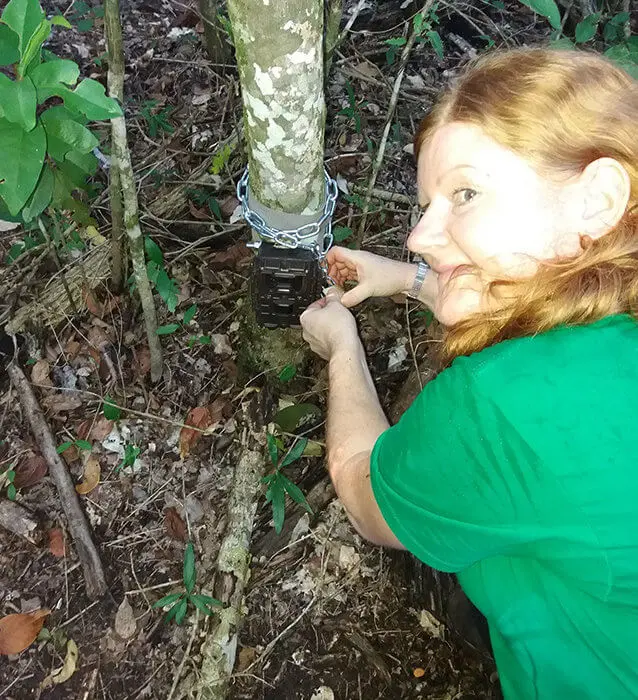
Our support often enables students to travel away from home, placing them in new environments where they can develop both personally and professionally. This frequently involves working in natural settings, contributing to real ecological research and conservation projects in locations across the world.
We also support laboratory-based experiences in leading research facilities, helping students build the practical skills and experience needed to pursue further study or careers in science. In many cases, we work in partnership with universities and organisations to deliver structured scholarship programmes, and we continue to explore opportunities to expand these partnerships.
Our Approach
We focus on providing meaningful, experience-based opportunities that complement academic study. By supporting placements that involve hands-on work, we help students gain a deeper understanding of environmental challenges and the realities of conservation work.
Our partnerships with academic institutions and organisations allow us to deliver consistent, high-quality opportunities. At the same time, we remain flexible, supporting individual students in exceptional circumstances, particularly where access to such experiences would otherwise be out of reach.
Our Impact
To date, we have provided over £150,000 in funding to support more than 300 students.
These opportunities have taken place both in the UK and internationally, including projects across Asia, Africa, and Central and South America.
Much of this support is delivered through ongoing scholarship programmes with partner institutions such as the University of Liverpool and Operation Wallacea, alongside direct support for individual students.
PROJECTS
Our work includes supporting students to take part in biodiversity research and conservation expeditions with Operation Wallacea, where they contribute directly to field-based ecological studies.
We have also supported a PhD student from Ecuador studying oceanography and marine biology in the Galápagos Islands, and funded places for students from the University of Liverpool to participate in residential laboratory programmes in environmental science.
Get Involved
Your support helps open doors for students at critical stages in their development.
By contributing, you are helping to build the skills and experience needed to address environmental challenges in the years ahead.